Don't miss your chance in Lord of the ocean!
Home → Similar Games
Games Similar to Lord of the Ocean
Games close to Lord of the Ocean
Book of Dead from Play'n GO shares a five-reel three-row layout with Lord of the Ocean while offering a higher RTP of 96.21 percent against the 95.10 percent return of the Novomatic title. The identical maximum win cap of 5,000x means both games provide similar payout ceilings despite different mathematical models. High volatility in both titles ensures that wins are less frequent but potentially larger than in low-variance alternatives.
Big Bass Splash by Pragmatic Play also utilizes a standard 5x3 grid and matches the 5,000x maximum win potential found in Lord of the Ocean. Its RTP stands at 96.71 percent, which is 1.61 percentage points higher than the 95.10 percent theoretical return of the Greentube slot. This difference suggests slightly better long-term retention for players choosing the Pragmatic release over the Novomatic original.
Le Cowboy developed by Hacksaw Gaming diverges structurally with six reels and variable row counts between two and seven rows compared to the fixed 5x3 setup of Lord of the Ocean. Despite this layout change, it offers a significantly higher maximum win of 25,000x versus the 5,000x cap of the ocean-themed slot. The medium volatility contrasts with the high volatility of Lord of the Ocean, altering the frequency and size of expected payouts.
Titles with similar maths
The Dog House Megaways from Pragmatic Play exhibits very high volatility, exceeding the high volatility rating assigned to Lord of the Ocean. Its maximum win potential reaches 12,305x, which is more than double the 5,000x ceiling defined for the Novomatic game. This mathematical structure allows for substantially larger payouts on single spins compared to the capped returns of the ocean theme.
Alles Spitze by Merkur operates with high volatility similar to Lord of the Ocean but features a much lower maximum win of 500x. This limit is one-tenth of the 5,000x potential available in the Greentube title, drastically reducing the upside for high rollers seeking large jackpots. The RTP of 90.85 percent is also significantly lower than the 95.10 percent return of Lord of the Ocean.
Book of Dead provides a high volatility profile matching Lord of the Ocean while delivering an RTP of 96.21 percent. This figure is 1.11 percentage points higher than the 95.10 percent return of the Novomatic slot, indicating a slightly lower house edge. Both titles share the same 5,000x maximum win cap, aligning their payout structures for players targeting top-tier prizes.
Same studio alternatives
Novomatic, the developer behind Lord of the Ocean, released Alles Spitze under its Merkur brand through digital division edict e-gaming. While Lord of the Ocean offers a 95.10 percent RTP, the Merkur title drops to 90.85 percent, representing a 4.25 percentage point decrease in theoretical return. This shift reflects different target markets and risk appetites within the same corporate portfolio.
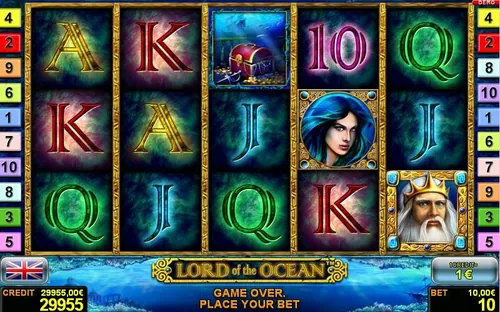
Lord of the Ocean was developed by Greentube, the digital arm of Novomatic, establishing a direct lineage from the traditional gaming giant. The slot maintains a classic 5x3 reel layout with ten paylines, distinct from modern megaways or cluster-pay mechanics. Players familiar with the Novomatic ecosystem will recognize the expanding wild and free spin features as core components of the game design.
The 2008 release date of Lord of the Ocean places it in an earlier era of online slot development compared to newer titles like Le Cowboy. Despite its age, the high volatility and 5,000x max win keep it relevant for players seeking substantial payouts from established providers. The 95.10 percent RTP remains competitive against many contemporary releases from the same studio family.
Comparable volatility
Lord of the Ocean features high volatility, meaning wins occur less frequently but tend to be larger when they do happen. This characteristic aligns it with Book of Dead and Big Bass Splash, which also exhibit high volatility profiles. High rollers should expect longer dry spells between significant payouts compared to medium or low volatility alternatives.
The Dog House Megaways escalates risk further with very high volatility, surpassing the high volatility setting of Lord of the Ocean. This increased variance supports its massive 12,305x maximum win potential, far exceeding the 5,000x cap of the Novomatic slot. Players must have sufficient bankroll tolerance to withstand the extended periods without major wins inherent to very high volatility games.
Le Cowboy introduces medium volatility, offering a smoother gameplay curve than the high volatility of Lord of the Ocean. This adjustment results in more frequent smaller wins, contrasting with the sporadic large payouts of the ocean-themed slot. The trade-off is a lower maximum win of 25,000x, which still dwarfs the 5,000x limit of Lord of the Ocean despite the gentler variance.
Comparable return figures
Lord of the Ocean provides a theoretical RTP of 95.10 percent, defining the long-term expected return per unit wagered. This figure sits between the lower 90.85 percent RTP of Alles Spitze and the higher returns of Play'n GO and Pragmatic Play titles. The 4.90 percent house edge derived from this RTP represents the casino's statistical advantage over time.
Book of Dead offers an RTP of 96.21 percent, which is 1.11 percentage points higher than the 95.10 percent return of Lord of the Ocean. This improvement reduces the house edge from 4.90 percent to 3.79 percent, providing slightly better value for players over millions of spins. The identical 5,000x max win cap ensures comparable payout structures despite the mathematical difference.
Big Bass Splash delivers the highest RTP among comparable titles at 96.71 percent, exceeding Lord of the Ocean by 1.61 percentage points. This results in a house edge of 3.29 percent, making it mathematically favorable compared to the 4.90 percent edge of the Novomatic slot. Both games share the same 5,000x maximum win limit, balancing the return difference with identical payout caps.
Lord of the Ocean compared with similar titles
| Game | Studio | RTP | Volatility | Max win |
|---|---|---|---|---|
| Lord of the Ocean | Novomatic (developed/operated via its digital division Greentube) | 95.10% | high | 5,000x |
| Alles Spitze | Merkur (developed by edict e-gaming under the Merkur/Gauselmann brand) | 90.85% | high | 500x |
| Book of Dead | Play'n GO | 96.21% | high | 5000x |
| Big Bass Splash | Pragmatic Play | 96.71% | high | 5000x |
| Le Cowboy | Hacksaw Gaming | 96.28% | medium | 25000x |
| The Dog House Megaways | Pragmatic Play | 96.55% | very high | 12305x |
| Wild Bounty Showdown | PG Soft (Pocket Games Soft) | 96.75% | medium | 5000x |
How these titles differ
The Lord of the Ocean slot by Novomatic utilizes a 5x3 reel layout with 10 paylines, establishing a classic framework for high volatility outcomes. This structure contrasts with Wild Bounty Showdown by PG Soft, which employs a unique diamond-shaped 6-reel layout featuring variable row heights of 3-4-5-5-4-3 symbols. The distinct mechanical differences mean that hit frequencies and bonus triggers vary significantly between these two specific gaming environments.
Novomatic released this Greek-themed title in 2008, predating modern video slots like Zeus vs Hades by Pragmatic Play, which features a wider 5x5 grid. While Lord of the Ocean relies on traditional expanding wilds, Zeus vs Hades introduces more complex interactive mechanics across its additional column. These structural variances directly influence how players experience the game flow and the frequency of winning combinations during standard play sessions.
Sizzling Hot Deluxe from Novomatic shares the developer lineage but maintains a medium volatility profile unlike the high variance of Lord of the Ocean. Buffalo by Aristocrat Gaming offers a 5x4 layout with medium-high volatility, sitting between the risk profiles of these specific Novomatic and Aristocrat releases. Understanding these foundational design choices helps analysts predict how capital depletion rates might differ across these comparable legacy and modern titles.
Feature sets side by side
Lord of the Ocean provides an expanding wild feature alongside free spins, enhancing potential payout scenarios within its high volatility framework. Sweet Bonanza Super Scatter by Pragmatic Play offers a different approach with a 6x5 layout and a max win cap of 50,000x the stake. The absence of a cash-out button in Lord of the Ocean means players must rely entirely on the RNG outcomes rather than manual intervention strategies.
The Gamble feature allows players to risk wins for higher multipliers, adding a strategic layer absent in games like Wild Bounty Showdown by PG Soft. Wild Bounty Showdown focuses on its unique reel mechanics without offering a secondary gamble option, altering the risk management approach for the session. This distinction requires high rollers to adjust their bankroll allocation when switching between Novomatic titles with Gamble options and other provider games lacking them.
Zeus vs Hades by Pragmatic Play includes its own set of interactive features that complement its high volatility rating and 15,000x maximum win potential. Unlike Lord of the Ocean, which caps at 5,000x, the higher ceiling in Zeus vs Hades suggests larger potential payouts per spin. Players analyzing these feature sets must account for how the max win limits impact the overall expected value over extended gameplay periods.
Payout ceilings compared
Lord of the Ocean imposes a maximum win cap of 5,000x the total bet amount, limiting the highest possible return from a single session. In contrast, Sweet Bonanza Super Scatter by Pragmatic Play allows for a significantly higher maximum win of 50,000x the stake on any given spin. This tenfold difference in payout ceilings fundamentally alters the risk-reward calculation for players targeting large jackpots within high volatility environments.
Zeus vs Hades by Pragmatic Play also exceeds the Lord of the Ocean limit with a maximum win potential of 15,000x the initial wager. While Sizzling Hot Deluxe by Novomatic matches the 5,000x cap of Lord of the Ocean, it achieves this under medium volatility conditions. Comparing these ceilings reveals how different providers balance the frequency of wins against the magnitude of the top-tier payouts available to participants.
Buffalo by Aristocrat Gaming presents a much lower maximum win cap of 1,200x the bet, suitable for players preferring smaller, more frequent returns. This figure is substantially lower than the 5,000x cap found in both Lord of the Ocean and Sizzling Hot Deluxe by Novomatic. High rollers comparing these payout structures must weigh the lower ceiling of Buffalo against its medium-high volatility to determine suitability for their specific bankroll management strategies.
Bet ranges compared
Lord of the Ocean accommodates wagers ranging from 0.10 to 100 units per spin, providing a flexible betting window for various player segments. This upper limit of 100 aligns with the typical maximum bets found in many high volatility slots, though it is lower than some premium tables. The minimum bet of 0.10 ensures accessibility for casual players while the 100 limit supports serious gamblers seeking higher exposure per round.
Sweet Bonanza Super Scatter by Pragmatic Play typically allows for broader betting ranges, often extending beyond 100 units depending on the casino platform configuration. While Lord of the Ocean caps at 100, games like Zeus vs Hades may offer similar or slightly higher maximums for high-stakes participants. Analyzing these ranges helps determine how quickly a bankroll might be depleted when playing at the maximum allowable bet on each respective title.
Wild Bounty Showdown by PG Soft and Buffalo by Aristocrat Gaming generally share similar low-end minimum bets around 0.10 or 0.20 units. However, their maximum bet limits may differ from the 100 unit cap of Lord of the Ocean, affecting the total turnover generated per hour. High rollers must verify the specific maximum stakes allowed on each platform to ensure their preferred betting strategy remains viable across different game providers.
Which suits which player
The 95.10% RTP of Lord of the Ocean implies a house edge of 4.90%, requiring sustained play to realize theoretical returns over hundreds of thousands of spins. Players seeking higher theoretical returns might prefer Wild Bounty Showdown by PG Soft, which offers a 96.75% RTP despite its medium volatility classification. This percentage difference represents a tangible cost advantage for long-term players choosing the PG Soft title over the Novomatic release.
High volatility seekers may find Lord of the Ocean appealing due to its potential for significant payouts up to 5,000x, despite the 4.90% house edge. Conversely, players preferring stability might choose Sizzling Hot Deluxe by Novomatic, which maintains a 95.66% RTP with medium volatility characteristics. The choice between these titles depends on whether the player prioritizes the chance for large wins or consistent, smaller returns during their session.
Welcome bonuses such as the 300% match up to €2,000 plus 100 free spins can extend playtime on Lord of the Ocean's 0.10 to 100 bet range. However, the 4.90% house edge means that converting bonus funds into withdrawable cash requires meeting specific wagering requirements efficiently. Players must calculate how the 5,000x max win cap interacts with bonus terms to ensure they do not exceed limits while attempting to clear the required turnover volume.
Trying alternatives in demo
The game Lord of the Ocean uses a 5x3 reel layout with 10 paylines, providing a standard structure for high rollers to test betting strategies. This configuration contrasts sharply with Le King by Hacksaw Gaming, which utilizes a wider 6x5 reel grid and medium volatility settings. Players can adjust their stake from 0.10 up to 100 per spin without risking actual funds during the demonstration phase.
High rollers often prefer titles like Pirots by ELK Studios due to its medium-high volatility profile compared to the high variance of Lord of the Ocean. The latter game features an expanding wild symbol that activates during free spins, offering a different risk-reward dynamic than the exploding mechanics found in Pirots. Testing these distinct feature sets helps players determine which volatility level aligns with their specific bankroll management goals.
Comparing Lord of the Ocean against Sizzling Hot by Novomatic reveals differences in theme despite both sharing a 5x3 layout and similar max win potential of 5000x. Sizzling Hot maintains a medium volatility rating, whereas Lord of the Ocean carries a high volatility designation that impacts payout frequency. Analyzing these technical distinctions in a risk-free environment allows serious players to refine their approach before committing capital.
Why variety helps bankroll
Lord of the Ocean operates with a theoretical RTP of 95.10%, resulting in a house edge of 4.90% over extended play sessions. This statistical baseline differs from Money Train by Relax Gaming, which offers a higher RTP of 96.20% and high volatility characteristics. Diversifying between games with varying return percentages helps manage long-term expected losses across different session types.
The maximum win cap for Lord of the Ocean is set at 5,000x the total bet, limiting the potential upside for any single winning combination. In contrast, Le King by Hacksaw Gaming provides a significantly larger maximum win potential of 20,000x on its 6x5 reels. Understanding these caps ensures that high rollers allocate their funds appropriately when chasing large payouts in high-variance environments.
Volatility levels dictate the frequency and size of payouts, with Lord of the Ocean classified as high volatility compared to the medium volatility of Sizzling Hot. High volatility slots like Lord of the Ocean require larger bankrolls to withstand dry spells between significant wins, unlike lower volatility alternatives. Spreading bets across different volatility profiles stabilizes the overall gaming experience and reduces the risk of rapid bankroll depletion.
Studios worth knowing
Novomatic developed Lord of the Ocean through its digital division Greentube, establishing a strong presence in the online slot market since 2008. This developer also created Sizzling Hot, which shares a similar 5x3 layout but offers a slightly higher RTP of 95.66%. Recognizing the studio's portfolio helps players anticipate consistent design elements and feature mechanics across different titles.
Hacksaw Gaming produces Le King, a title featuring a 6x5 reel layout and medium volatility that contrasts with the traditional structure of Lord of the Ocean. The studio focuses on modern mechanics that appeal to players seeking variety beyond classic fruit themes or ancient mythology settings. Comparing Hacksaw Gaming's output with Novomatic's catalog highlights the evolution of slot design and player expectations over time.
ELK Studios is responsible for creating Pirots, a game with medium-high volatility and a 5x5 reel grid that differs from the 5x3 format of Lord of the Ocean. The studio continues this trajectory with Pirots 4, which expands the layout to 6x6 reels while maintaining a 94.00% RTP. Investigating ELK Studios' portfolio provides insight into how developers are innovating within the exploding cluster-pay genre.
Newer releases in the genre
Pirots 4 by ELK Studios represents a newer iteration in the exploding mechanic genre, featuring a 6x6 reel layout and a maximum win of 10,000x. This title updates the formula established by earlier releases with enhanced visuals and increased grid dimensions compared to the static 5x3 reels of Lord of the Ocean. The 94.00% RTP remains consistent with other entries in the Pirots series, offering predictable long-term returns.
Money Train by Relax Gaming introduces a high volatility profile with a 96.20% RTP and a massive 20,000x maximum win potential on its 5x4 reels. Unlike Lord of the Ocean, which relies on traditional paylines, Money Train utilizes a bonus-heavy structure that appeals to players seeking substantial jackpot opportunities. The higher RTP and larger win cap make it a compelling alternative for high rollers willing to accept greater variance.
Le King by Hacksaw Gaming stands out with its unique 6x5 reel setup and medium volatility, contrasting with the high volatility nature of Lord of the Ocean. The game offers a maximum win of 20,000x, providing significantly higher upside potential than the 5,000x cap found in Lord of the Ocean. Exploring these newer releases allows players to access innovative mechanics and improved mathematical models not present in older titles.
Picking your next title
Players seeking high volatility action should consider Lord of the Ocean, which features a 95.10% RTP and a maximum win of 5,000x on its 5x3 reels. Those preferring higher potential returns might opt for Le King by Hacksaw Gaming, which offers a 20,000x max win despite its medium volatility classification. Evaluating the volatility and win cap together helps match the game to the player's risk tolerance and bankroll size.
For players interested in exploring different reel configurations, Pirots 4 by ELK Studios provides a 6x6 layout with medium-high volatility and a 10,000x maximum win. This structure differs significantly from the traditional 5x3 grid of Lord of the Ocean, offering a fresh gameplay experience with updated mechanics. The consistent 94.00% RTP across the Pirots series ensures familiarity for players transitioning between titles.
High rollers looking for the highest theoretical return may choose Money Train by Relax Gaming, which boasts a 96.20% RTP and high volatility on 5x4 reels. This title offers a 20,000x max win, substantially exceeding the 5,000x limit of Lord of the Ocean and appealing to those chasing large payouts. Selecting a game based on these precise mathematical parameters ensures informed decision-making regarding bankroll allocation.
DemoRTP & VolatilitySymbols & PayoutsBonus FeaturesStrategyBonusesMobileDownload & AppMax WinSimilar GamesReviewFAQSitemap
Lord of the ocean 2025