
Don't miss your chance in Lord of the ocean!
Home → Strategy
Lord of the Ocean Strategy
Approaching Lord of the Ocean sensibly
Novomatic developed Lord of the Ocean in 2008 as a high volatility slot featuring an Ancient Greek/Poseidon ocean theme with expanding wild and free spins. This design choice creates significant variance, meaning players must expect long dry spells between substantial payouts during their gaming sessions. The theoretical return is set at 95.10%, which defines the house edge at 4.90% over millions of spins rather than short-term results. Understanding this mathematical foundation helps manage expectations before placing the first wager on the reels.
The maximum win potential stands at 5,000x the stake, offering a substantial payout cap for those who survive the high volatility periods. This limit applies to the total winnings from any single session or bonus round, capping the upside regardless of how many expanding wilds appear. Players seeking consistent small wins might find the hit frequency too low compared to lower volatility alternatives available on the market. Recognizing this constraint allows gamblers to adjust their strategy accordingly when playing Novomatic titles online.
For comparison, Alles Spitze by Merkur offers a much lower maximum win of 500x with a significantly different risk profile for its users. Lord of the Ocean requires a larger bankroll to withstand the swings inherent in its high volatility structure and 95.10% RTP. The 10 paylines provide straightforward winning combinations but do not mitigate the impact of losing streaks common in high-variance games. Analyzing these differences ensures that players choose a title that aligns with their specific tolerance for financial risk.
Bonus terms may impose additional constraints on withdrawing winnings derived from features like free spins or the Gamble feature. Always verify the wagering requirements attached to any promotional funds before attempting to cash out profits generated from the base game. Failure to meet these conditions can result in the forfeiture of both bonus money and associated winnings. Clear understanding of these rules prevents unexpected account restrictions after a successful gaming session.
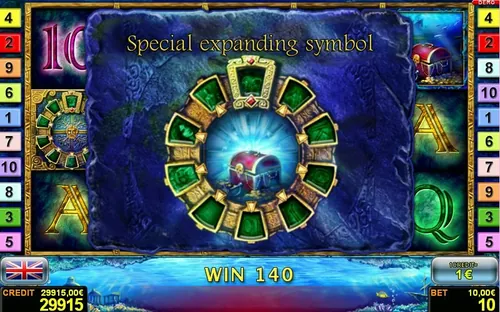
Bankroll rules that hold up
A flat betting strategy involves wagering the same amount every round, which helps stabilize losses against the 95.10% theoretical return rate. This method prevents rapid depletion of the bankroll compared to progressive staking systems that raise stakes after losses occur. With a minimum bet of 0.10 euros, players can extend their playtime significantly while enduring the high volatility of the slot. Consistency in stake size is crucial for managing risk over extended periods of gameplay.
Progressive staking increases bets after losses, which does not change the built-in 4.90% house edge but accelerates the time to ruin. Raising stakes during a downturn can quickly exhaust a limited bankroll due to the compounding effect of increased exposure. Lord of the Ocean's high volatility means losing streaks are frequent, making aggressive betting strategies particularly dangerous for inexperienced players. Maintaining a fixed budget protects against emotional decisions driven by recent negative outcomes.
The maximum bet of 100 euros per spin represents the upper limit for high rollers seeking faster action or larger potential payouts. Betting this amount requires a substantially larger bankroll to absorb potential downswings without going bust during a session. A common rule suggests having at least 100 times the maximum bet to withstand high volatility fluctuations effectively. This buffer ensures that players remain within their financial limits even during unfavorable statistical runs.
In contrast, Alles Spitze allows a maximum win of only 500x, requiring less capital preservation for similar volatility levels. Lord of the Ocean demands more robust financial planning due to its higher 5,000x max win potential and distinct volatility profile. Players should calculate their session limits based on the minimum viable bankroll needed to cover expected variance. Proper allocation of funds ensures longevity and reduces the likelihood of premature account depletion.
Bet sizing against volatility
The high volatility of Lord of the Ocean dictates that smaller bets preserve bankrolls longer during inevitable dry spells. Setting a stake near the 0.10 euro minimum allows for hundreds of spins, increasing the chance of hitting the expanding wild feature. Larger bets increase variance exponentially, risking rapid loss of funds before triggering the lucrative free spins bonus round. Strategic bet sizing balances entertainment value with financial sustainability across multiple gaming sessions.
Each spin costs between 0.10 and 100 euros, directly impacting the duration of play relative to the available bankroll. A 100 euro bankroll at 1 euro per spin lasts roughly 100 rounds, which may be insufficient for high volatility games. Extending playtime increases the probability of encountering the 95.10% RTP over a larger sample size of spins. Calculating spins per euro helps players determine realistic session lengths before starting gameplay.
Alles Spitze by Merkur has a high volatility rating but caps wins at 500x, altering the optimal bet sizing approach for its players. Lord of the Ocean’s 5,000x max win justifies slightly higher stakes for those with sufficient capital to absorb variance. The 10 paylines mean each bet covers all lines, so adjusting the coin value changes the total stake proportionally. Understanding this mechanic allows precise control over risk exposure during each gaming session.
The Gamble feature offers an additional layer of risk, potentially doubling or quadrupling winnings from a winning spin. Using this feature conservatively preserves gains, while aggressive use can erase previous profits in a single incorrect guess. High volatility slots often have lower hit frequencies, making the Gamble feature tempting but statistically disadvantageous over time. Careful consideration of odds helps maintain bankroll integrity when utilizing optional bonus features.
Session limits worth setting
Setting a time limit prevents fatigue-induced errors when playing Lord of the Ocean’s complex expanding wild mechanics. Extended sessions increase exposure to the 4.90% house edge, gradually eroding the initial bankroll through statistical inevitability. A two-hour limit ensures players stop while still engaged, avoiding the temptation to chase losses after prolonged downtime. Time management complements financial discipline in maintaining responsible gambling habits.
A loss limit of 50% of the starting bankroll forces a break when the session turns unfavorable against the 95.10% RTP. Stopping at this threshold prevents emotional decision-making that often leads to chasing deficits in high volatility environments. Lord of the Ocean’s high variance means losses can accumulate quickly, making strict adherence to predefined limits essential. This practice protects the remaining funds for future sessions or other entertainment activities.
Win goals provide a clear exit point, such as stopping after achieving a 100% profit on the initial deposit. Securing profits locks in gains and removes the pressure to reinvest winnings into further risky spins. Lord of the Ocean’s 5,000x max win potential makes large payouts possible, but securing them requires disciplined withdrawal practices. Defining success criteria beforehand eliminates ambiguity and reinforces rational behavior during gameplay.
Alles Spitze’s lower 500x max win cap suggests shorter, more frequent sessions compared to the extended endurance required for Lord of the Ocean. Different volatility profiles necessitate tailored session strategies to maximize enjoyment and minimize financial impact. Adjusting session length based on individual tolerance for variance ensures a sustainable approach to online slot gaming. Regular breaks help maintain perspective and prevent the distortion of reality caused by prolonged play.
Why chasing losses fails
Chasing losses in Lord of the Ocean ignores the independence of each spin and the constant 4.90% house edge. Increasing bets after a deficit does not improve the odds of recovering lost funds due to the random number generator. High volatility amplifies the psychological impact of losing streaks, making impulsive betting decisions more likely and financially damaging. Statistical reality remains unchanged regardless of recent outcomes or perceived patterns in the game history.
The 95.10% RTP guarantees that over millions of spins, the casino retains 4.90% of all wagered money, ensuring long-term profitability. Short-term deviations from this average cannot be predicted or influenced by betting adjustments made during a session. Attempting to recover losses through larger wagers exposes the bankroll to greater risk without altering the underlying mathematics. Accepting losses as part of the game’s variance is crucial for maintaining financial stability.
Lord of the Ocean’s high volatility means that winning combinations are spaced further apart, creating extended periods of net loss. These dry spells can trigger frustration and the urge to increase stakes to force a positive outcome. However, no betting system can overcome the built-in advantage held by the operator in any fair slot game. Recognizing the futility of chasing losses helps players avoid catastrophic financial mistakes during challenging sessions.
Alles Spitze by Merkur also features high volatility, demonstrating that chasing losses is equally ineffective across different slot titles. The 90.85% RTP indicates an even higher house edge, further reducing the chances of successful recovery attempts. Each game operates independently, meaning past results provide no information about future spin outcomes. Responsible gambling involves accepting variance and sticking to pre-determined limits rather than reacting emotionally to losses.
Lord of the Ocean: key facts
| Parameter | Value |
|---|---|
| Game | Lord of the Ocean |
| Studio | Novomatic (developed/operated via its digital division Greentube) |
| Released | 2008 |
| RTP | 95.10% |
| House edge | 4.90% |
| Volatility | high |
| Max win | 5,000x |
| Reels | 5x3 |
| Paylines / ways | 10 lines |
| Bet range | 0.10 – 100 |
Common systems and their limits
The theoretical RTP of 95.10% establishes a fixed mathematical boundary for Lord of the Ocean that no betting pattern can overcome. This figure represents the long-term average return, meaning the casino retains a permanent house edge of 4.90% on every wager placed. Consequently, high rollers attempting to use complex progression systems will only accelerate the depletion of their bankroll without altering this negative expectation.
Lord of the Ocean features a maximum win cap of 5,000x the stake, which strictly limits the upside potential during any single session. This ceiling contrasts sharply with titles like Book of Dead, which also caps at 5,000x but operates under different volatility parameters. High rollers must accept that even a perfect streak cannot yield returns exceeding this specific multiplier limit set by Novomatic.
The game utilizes a standard 5x3 reel layout with exactly 10 paylines, providing a structured framework for bet placement. Unlike progressive crash games, Lord of the Ocean has no cash-out button, forcing players to commit fully to each spin outcome. This structural rigidity ensures that the 95.10% RTP remains the sole determinant of long-term profitability regardless of entry timing.
Flat betting explained
Flat betting involves wagering the same amount on every round, maintaining a constant exposure to the 4.90% house edge throughout the session. By keeping stakes uniform, high rollers can precisely calculate their expected loss rate based on total turnover rather than volatile bet swings. This method aligns with the 95.10% RTP as a stable statistical baseline over hundreds of thousands of spins.
The minimum bet of 0.10 € allows for extended play, while the maximum of 100 € defines the upper limit of this consistent approach. A flat strategy using the top stake exposes the player to significantly higher variance compared to lower bets within the same range. This discipline prevents the emotional decision-making that often leads to rapid bankroll erosion in high-volatility environments.
Lord of the Ocean’s high volatility means that flat betting will likely result in long dry spells between significant payouts. Players must maintain sufficient liquidity to survive these downswings while waiting for the expanding wild or free spins triggers. The consistency of the stake ensures that the theoretical return converges toward 95.10% more predictably than erratic wagering patterns.
Progressive staking risks
Progressive staking requires raising stakes after losses, a strategy that mathematically shortens the time to ruin without changing the built-in edge. Increasing wagers during a losing streak amplifies exposure to the 4.90% house edge on progressively larger sums. This approach is fundamentally flawed because the RNG ensures each spin remains independent of previous outcomes.
With a maximum win of 5,000x, the potential reward does not justify the exponential risk associated with martingale-style increases. High rollers may chase losses aggressively, but the 100 € table limit eventually caps the ability to recover deficits through doubling. This hard constraint makes progressive systems particularly dangerous when applied to Lord of the Ocean's high volatility profile.
Unlike low-variance games, Lord of the Ocean’s feature frequency does not support reliable recovery cycles for aggressive stakers. The Gamble feature offers an additional layer of risk where players can lose accumulated winnings, further destabilizing any progressive plan. Sustained losses quickly deplete the bankroll before the theoretical 95.10% return can manifest in any meaningful way.
What the maths actually allows
The 95.10% RTP dictates that for every 100 € wagered, the game returns 95.10 € on average over an infinite horizon. This calculation leaves a guaranteed 4.90 € loss per 100 € beted, representing the casino’s mathematical advantage. High rollers must view this percentage as a cost of entertainment rather than a pathway to profit.
High volatility ensures that results deviate significantly from the mean in both directions during shorter sessions. While the maximum win of 5,000x offers a tempting target, the probability of hitting it remains extremely low. This distribution means most high-roller sessions will end below the starting balance despite occasional large payouts.
Novomatic’s design prioritizes the expanding wild and free spins as primary drivers of variance within the 10-line structure. These features create clusters of wins separated by long periods of non-payout, challenging the patience of high-stakes players. The mathematical model supports big wins but demands a bankroll capable of absorbing the associated drawdowns.
Reading variance honestly
Lord of the Ocean’s high volatility classifies it as a high-risk product suitable only for players with substantial financial buffers. The wide swing between small frequent wins and rare large payouts requires careful bankroll management to avoid early termination. Ignoring this variance leads to misjudged expectations about session duration and profitability.
The 100 € maximum bet per spin allows for high-volume action, but each spin carries a disproportionate weight against the bankroll. Compared to low-volatility slots, Lord of the Ocean depletes funds faster during losing streaks due to the larger average loss per cycle. High rollers must size their bets relative to their total capital, not just their immediate desire for excitement.
Theoretical models assume infinite play to realize the 95.10% RTP, a condition impossible for any real-world gambling session. Short-term results are dominated by luck and variance, making the house edge irrelevant in individual outcomes. Understanding this distinction prevents high rollers from attributing short-term losses to system flaws rather than statistical reality.
Learning the game in demo first
Novomatic launched Lord of the Ocean in 2008 with a fixed 10-line reel layout that requires precise alignment for payouts. This specific configuration differs significantly from the 5x3 grid used in Big Bass Splash by Pragmatic Play, which offers different volatility profiles for high rollers seeking varied exposure. Understanding this structural distinction helps players manage their bankroll more effectively when transitioning between these two distinct titles available on the market today. The fixed line count ensures predictable variance compared to open-ended ways systems.
The theoretical RTP of 95.10% establishes a house edge of 4.90% over extended play sessions involving hundreds of thousands of spins. This mathematical baseline remains constant regardless of whether a player chooses to engage with Lord of the Ocean or explores alternatives like Big Bass Splash. Recognizing this fixed percentage allows analysts to calculate expected losses accurately before committing real funds to any gaming session. The long-run average provides a reliable metric for evaluating the game's mathematical fairness against industry standards.
High volatility characteristics mean that winning combinations occur less frequently but offer larger potential payouts up to 5,000x the stake. This risk profile contrasts sharply with lower volatility options, demanding a substantial bankroll to withstand dry spells during gameplay. Players must adjust their expectations accordingly, as the expanding wild and free spins features do not guarantee immediate returns. Such extreme variance requires careful capital allocation to ensure sustained participation during losing streaks.
Adjusting stakes to your budget
The minimum bet of 0.10 € per spin allows for extensive testing of the 10 paylines without rapid bankroll depletion. This low entry point enables high rollers to analyze the game mechanics thoroughly while maintaining control over their initial investment levels. In contrast, the maximum bet of 100 € facilitates aggressive staking strategies designed to capitalize on the expanding wild feature during bonus rounds. Such flexibility supports various betting approaches depending on individual risk tolerance and financial capacity.
Flat betting at the minimum stake extends gameplay duration significantly compared to progressive staking methods that increase bets after losses. This conservative approach preserves capital during volatile periods, allowing players to experience the full range of features including free spins. The 4.90% house edge remains unchanged regardless of stake size, meaning that higher wagers only accelerate the rate of potential loss. Strategic patience often yields better long-term results than attempting to chase losses through increased wagering amounts.
Calculating hourly costs involves multiplying the spin frequency by the chosen stake to determine sustainable playing time within budget limits. For instance, betting 100 € per spin at ten spins per minute generates significant turnover that depletes funds rapidly compared to lower stakes. High rollers must account for this velocity when planning sessions around the 5,000x max win cap potential. Proper calculation prevents unexpected financial strain during extended gaming periods requiring disciplined bankroll management.
Recognising a bad session
A prolonged absence of wins despite hitting the 10 paylines indicates unfavorable variance typical of high volatility slots like Lord of the Ocean. This statistical reality differs from games such as Big Bass Splash, where hit frequency may provide more regular smaller payouts to sustain engagement. Analysts observe that consecutive non-winning spins are mathematically inevitable given the 95.10% return rate over short timeframes. Recognizing this pattern helps prevent emotional decision-making that leads to reckless betting behavior during downturns.
The house edge of 4.90% ensures that negative expectancy accumulates steadily when sessions extend beyond normal variance windows. High rollers monitoring their bankroll should compare current losses against the theoretical expectation based on total wagered amount. If losses exceed projected ranges significantly, it signals a deviation requiring immediate cessation of play rather than continued engagement. This analytical approach protects capital by acknowledging the mathematical certainty of eventual ruin under infinite play conditions.
Monitoring the ratio of bonus triggers to base game spins reveals whether the random number generator is performing within expected parameters. Lord of the Ocean relies heavily on its expanding wild and free spins features to deliver the advertised 5,000x max win potential. A complete failure to activate these mechanisms during extended play suggests either extreme bad luck or technical issues requiring investigation. Such anomalies warrant immediate withdrawal of funds to prevent further unnecessary exposure to the built-in casino advantage.
Stopping while ahead
Cashing out after achieving significant wins preserves profits against the inevitable erosion caused by the 4.90% house edge over time. High rollers who secure gains exceeding their initial bankroll demonstrate superior discipline compared to those reinvesting winnings into further play. This strategy contrasts with progressive staking systems that attempt to maximize returns but ultimately succumb to mathematical probability. Securing partial victories ensures positive net results even if subsequent sessions result in total loss of remaining funds.
The maximum win cap of 5,000x represents the absolute ceiling for payout potential, making excessive greed counterproductive to long-term success. Players who recognize this limit and withdraw accordingly avoid the psychological trap of expecting infinite growth from a finite mathematical model. Unlike games with uncapped prizes, Lord of the Ocean imposes strict boundaries that reward timely exits during peak performance periods. This awareness distinguishes professional analysts from amateur gamblers who chase unrealistic outcomes beyond established mathematical constraints.
Comparing current balance against the starting deposit provides a clear metric for determining optimal exit timing during profitable sessions. If a player has doubled their initial stake using the minimum 0.10 € bet, they have achieved a 100% return on investment. Such milestones signal favorable variance that should be capitalized upon rather than risked against future unpredictable outcomes. Strategic withdrawal at these points locks in gains that might otherwise disappear due to the relentless pressure of the house edge.
Responsible play in practice
Setting daily loss limits based on a percentage of total bankroll prevents catastrophic financial damage during unlucky streaks common in high volatility games. Lord of the Ocean’s 4.90% house edge guarantees gradual erosion unless strict boundaries are enforced by the player themselves. This protective measure stands in stark contrast to unregulated environments where no such safeguards exist for vulnerable individuals. Implementing hard caps ensures that gambling remains entertainment rather than becoming a source of severe financial distress.
Utilizing the demo mode provided by Novomatic allows players to understand the 10-line structure and 5,000x win potential without risking real money. This educational step is crucial for high rollers who need to assess whether the game’s volatility aligns with their risk appetite. Many fail to realize that free spins and expanding wilds operate on complex algorithms requiring strategic understanding to navigate effectively. Practicing without financial consequence builds necessary familiarity with the game’s unique mechanics before committing actual funds.
Maintaining detailed records of every session’s outcome enables accurate analysis of performance against the theoretical 95.10% RTP over time. This documentation helps identify patterns of irrational behavior such as chasing losses or increasing stakes impulsively during winning streaks. Professional analysts recommend reviewing these logs weekly to ensure adherence to predetermined budgetary constraints and responsible gaming principles. Such rigorous self-monitoring transforms gambling from a chaotic activity into a controlled exercise in mathematical probability management.
DemoRTP & VolatilitySymbols & PayoutsBonus FeaturesStrategyBonusesMobileDownload & AppMax WinSimilar GamesReviewFAQSitemap
Lord of the ocean 2025